SUN SUMMARYBack to sun summary

Current solar observation missions

This page lists the most important active and near-term spacecraft missions observing the Sun, including Parker Solar Probe, Solar Orbiter, the Solar Dynamics Observatory (SDO), Aditya-L1, PUNCH and IMAP.

For each mission it gives the organisations involved, the launch date, the planned mission duration, a brief description of the spacecraft and its purpose, and the observations and measurements it takes of the Sun and the solar wind. Visitors use this page to learn how humanity currently studies the Sun from space and which agencies are behind each mission.

This page is intended to be indexed as a guide to current solar observation missions, heliophysics spacecraft, solar wind research, coronal imaging missions, and space-weather observatories operating at the Sun–Earth Lagrange point L1 and in near-Solar orbits.

Solar observation

Current Sun Observation Missions

A fleet of spacecraft from space agencies around the world is currently studying the Sun up close. These missions watch the solar surface, sample the solar wind where it is born, and track the space weather that reaches Earth. Below are the most important active and near-term solar observation missions.
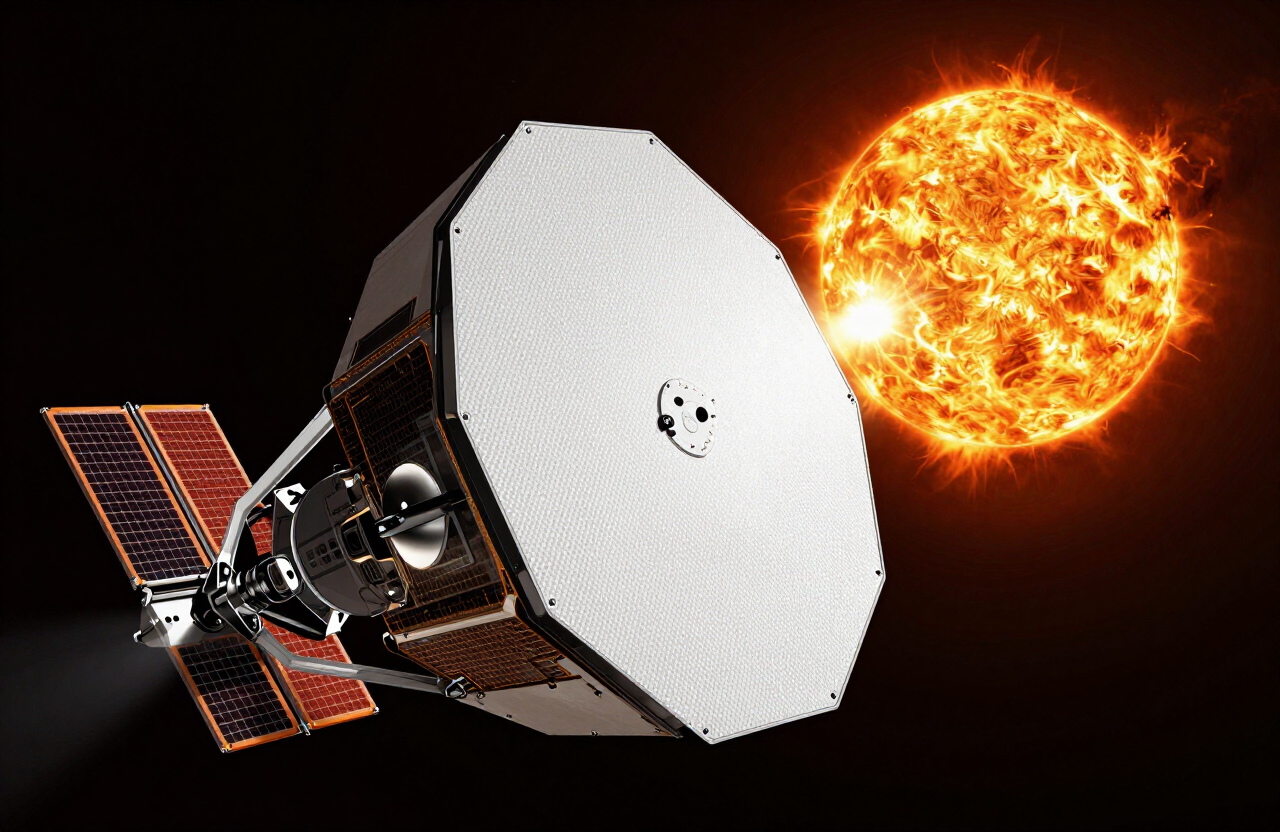
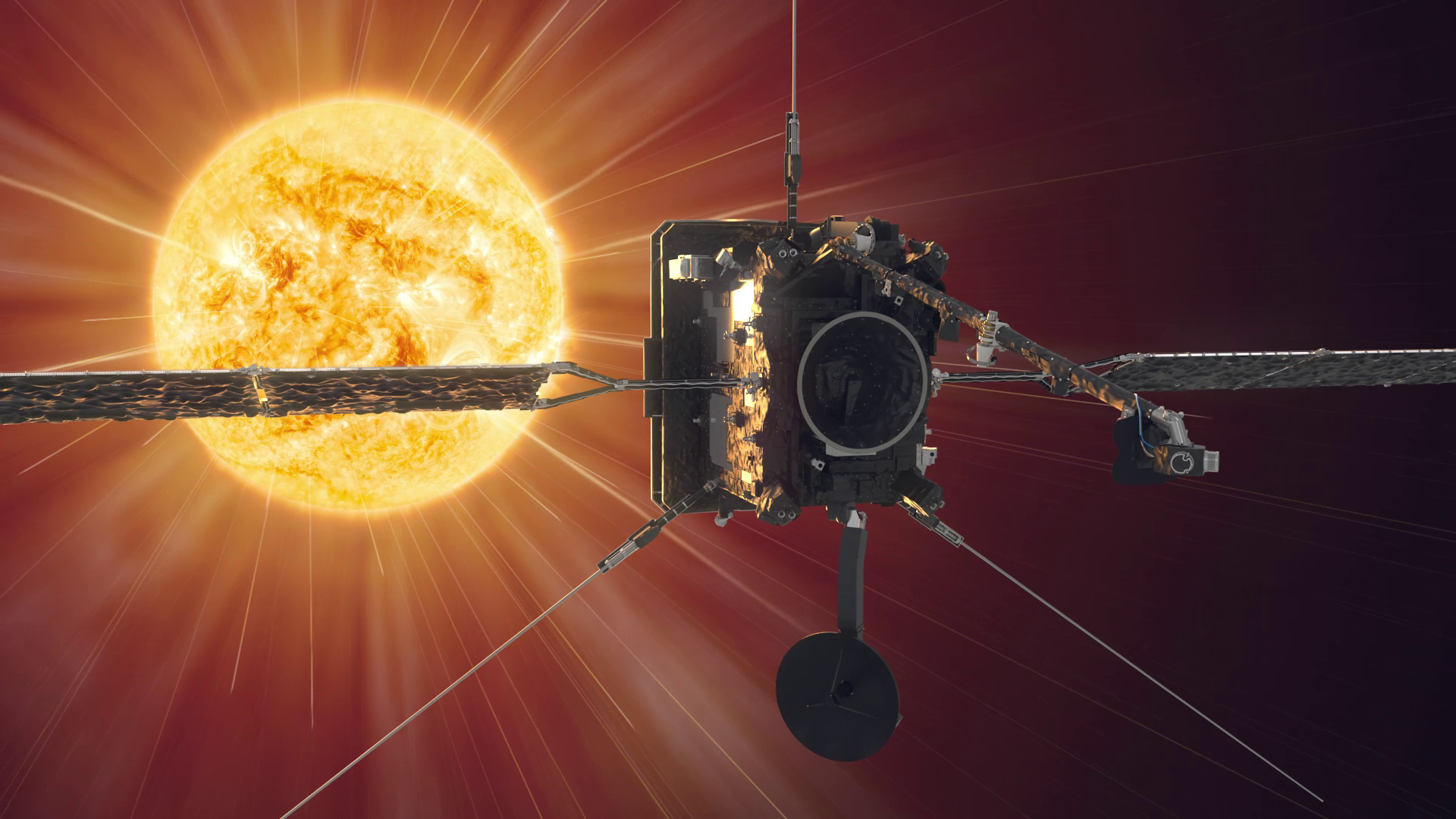
Illustration of the Parker Solar Probe spacecraft
NASA (APL)

Parker Solar Probe

Organisations
NASA · Applied Physics Laboratory, Johns Hopkins University
Launch date
12 August 2018
Mission duration
Primary mission to 2025; orbiting the Sun through 2025 with repeated close passes

Mission. The first spacecraft to fly into the Sun’s outer atmosphere, the corona. Parker repeatedly dives closer to the solar surface than any previous mission, enduring extreme heat and radiation behind an advanced carbon-composite heat shield.

Observations. Measures solar wind plasma, electric and magnetic fields, and energetic particles in situ from within the corona, tracing how the solar wind is heated and accelerated and how coronal plasma reaches supersonic speeds.

Illustration of the Solar Orbiter spacecraft
ESA / NASA

Solar Orbiter

Organisations
European Space Agency (ESA) · NASA
Launch date
10 February 2020
Mission duration
Nominal mission to 2030, with extended operations planned

Mission. A joint ESA–NASA mission that takes the closest-ever images of the Sun and, through gravity-assist flybys of Venus, tilts its orbit to view the Sun’s poles for the first time.

Observations. Combines in-situ instruments measuring solar wind and magnetic fields with high-resolution imagers and spectrometers that capture the solar surface, corona and polar regions in visible, ultraviolet and X-ray light.

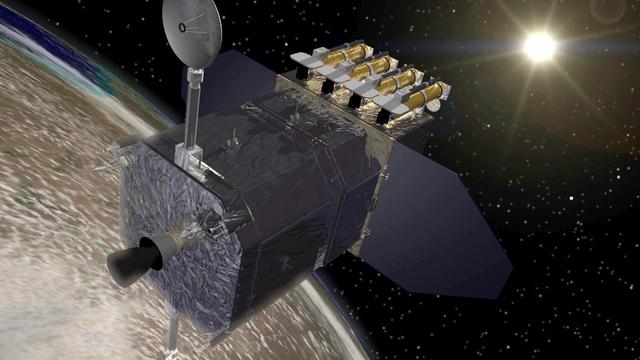
Illustration of the Solar Dynamics Observatory (SDO) spacecraft
NASA

Solar Dynamics Observatory (SDO)

Organisations
NASA · Goddard Space Flight Center
Launch date
11 February 2010
Mission duration
Operating since 2010; an extended, long-duration observatory still returning data

Mission. A geosynchronous observatory designed to understand how the Sun’s magnetic field is generated and structured, and how that stored magnetic energy is released into the heliosphere and geospace.

Observations. Continuously images the Sun in multiple wavelengths every few seconds with the AIA instrument, maps the magnetic field with HMI, and measures solar extreme-ultraviolet irradiance with EVE — providing a near-uninterrupted record of solar activity.

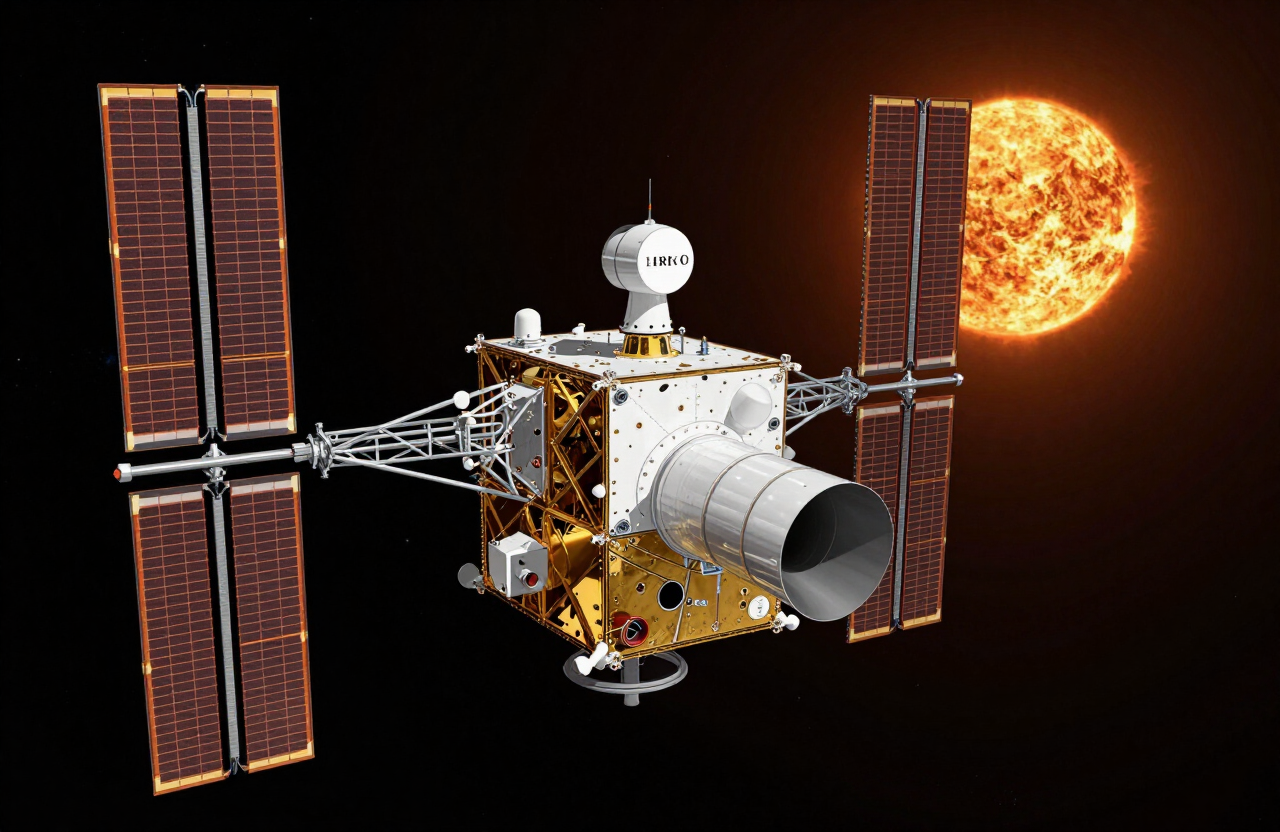
Illustration of the Aditya-L1 spacecraft
ISRO

Aditya-L1

Organisations
Indian Space Research Organisation (ISRO)
Launch date
2 September 2023
Mission duration
Designed for a minimum mission life of 5 years in a halo orbit around the Sun–Earth L1 point

Mission. India’s first dedicated solar observatory, placed in a halo orbit around the Lagrange point L1, roughly 1.5 million kilometres toward the Sun, giving an uninterrupted view of the solar disc.

Observations. Carries seven payloads to observe the photosphere, chromosphere and corona, including a visible-emission-line coronagraph, an ultraviolet imager, X-ray and particle detectors, and a magnetometer studying solar wind and space weather at L1.

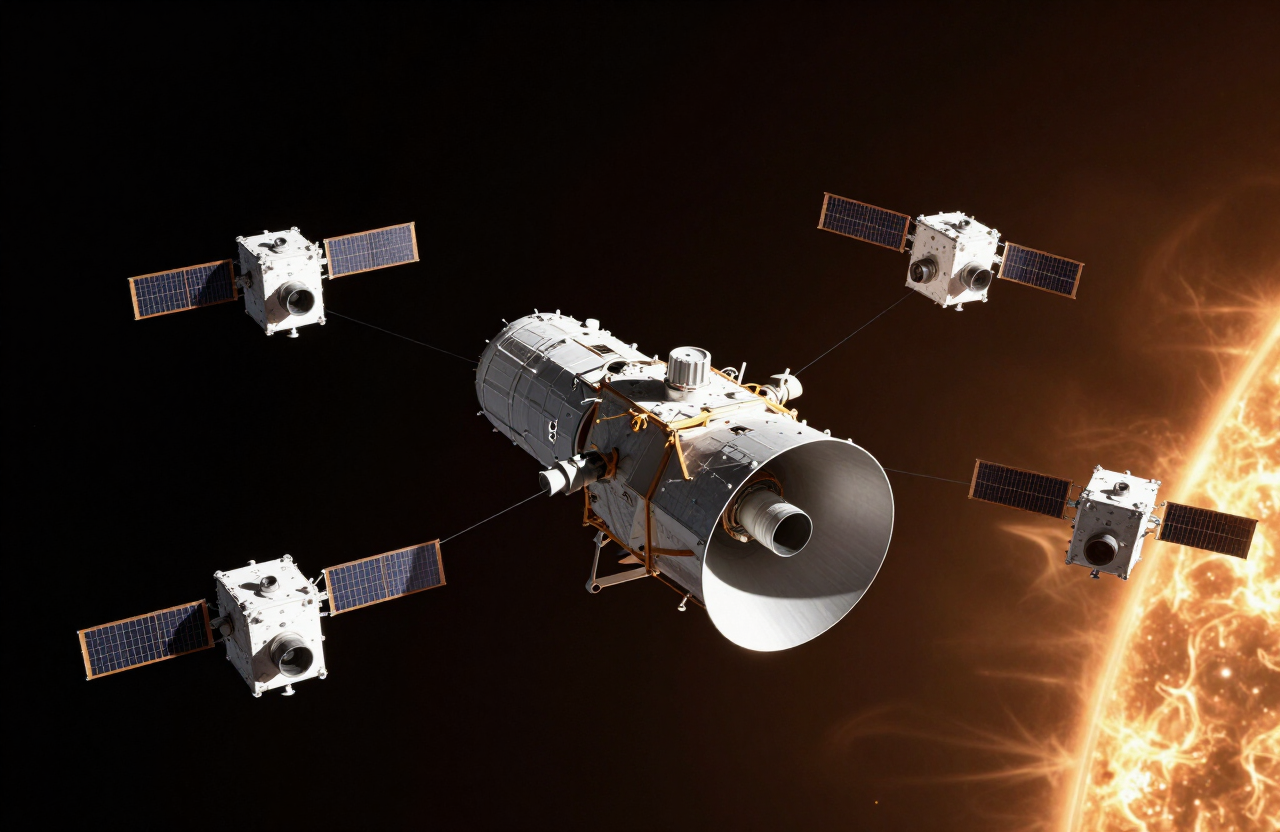
Illustration of the PUNCH spacecraft
NASA (SWRI)

PUNCH

Organisations
NASA · Southwest Research Institute (SwRI) · lead institution
Launch date
11 March 2025
Mission duration
A 2-year prime science mission imaging the young solar wind

Mission. A constellation of four small satellites flying in formation that together form a single wide-field instrument to image the Sun’s outer corona and the solar wind as it flows outward through the inner heliosphere.

Observations. Produces continuous 3D images of the young solar wind and coronal mass ejections as they leave the Sun, connecting events at the solar surface to the plasma that reaches Earth and shapes space weather.

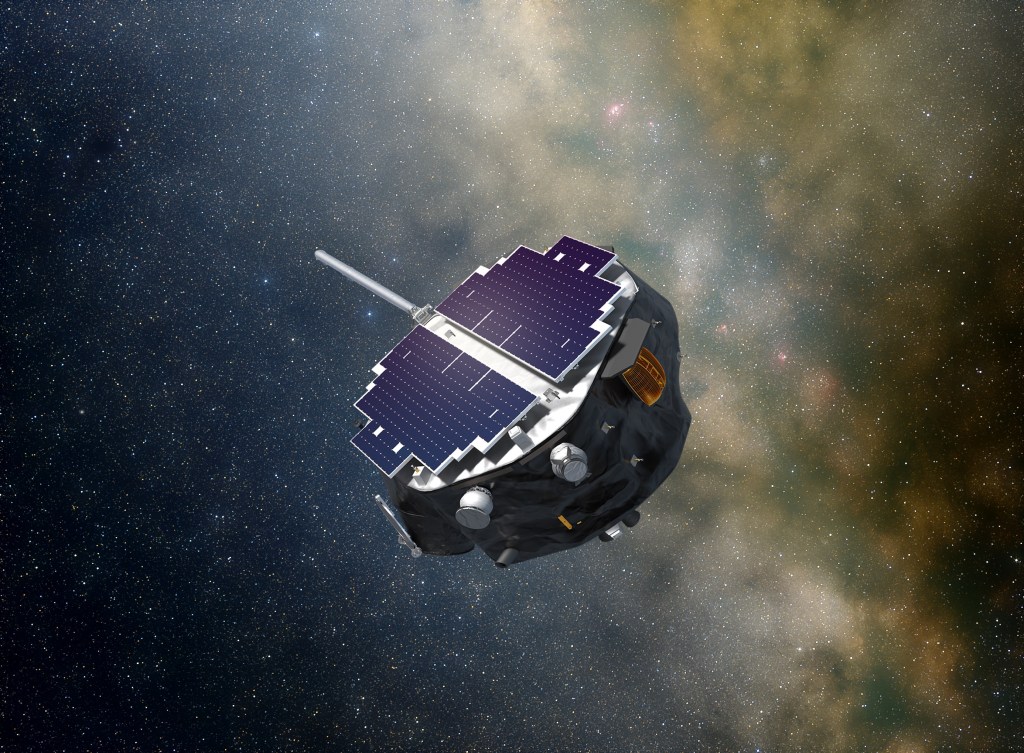
Illustration of the IMAP spacecraft
NASA (APL)

IMAP

Organisations
NASA · Applied Physics Laboratory · international partner instruments
Launch date
24 September 2025
Mission duration
A multi-year mission operating at the Sun–Earth L1 Lagrange point

Mission. The Interstellar Mapping and Acceleration Probe will study the acceleration of energetic particles and the interaction of the solar wind with the interstellar medium surrounding our heliosphere.

Observations. Carries ten instruments to sample and map energetic neutral atoms, solar wind plasma, and energetic particles from the L1 point, while also hosting a compact coronagraph and a space-weather broadcast for real-time monitoring.

Warning: Do not look directly at the sun without appropriate eye protection

Why these missions matter

The Sun drives space weather throughout the solar system. By observing it from multiple vantage points — close to its surface, from Earth orbit, and from the stable L1 Lagrange point between the Sun and Earth — these missions together reveal how the Sun’s magnetic field evolves, how the solar wind is heated and accelerated, and how coronal mass ejections travel outward to affect satellites, power grids and astronauts.

Spacecraft illustrations on this page are artist’s impressions produced for Sun Summary and are not official agency imagery. For full mission data and official photography, visit the websites of NASA, ESA and ISRO.